May 5, 2026
Download the slides for this presentation
FIRST pandemic network researchers have presented a model for turning First Nations community panels into recommendations that can be quickly activated during a public health emergency. The approach builds on work developed by Dr Kristy Crooks during the COVID pandemic and implemented more broadly on other public health issues.
Bryony Roberts, FIRST Project Manager and Gomeroi woman, and Stephanie Walker, FIRST Community Engagement Officer and Yorta Yorta woman, of the FIRST pandemic network and the Doherty Institute, presented at the Aboriginal Health Showcase 2026.
The showcase was hosted by the Melbourne Academic Centre for Health (MACH) Aboriginal Leadership Group in partnership with Monash Partners Health Translation Network and Western Alliance Academic Health Science Centre.
The presenters discussed how during COVID-19, First Nations communities acted quickly with responses embedded in cultural values, supported by national Aboriginal and Torres Strait Islander leadership that informed government decision-making and produced national guidance for First Nations communities.
Despite this leadership, First Nations voices were not consistently embedded across all levels in the pandemic response. Genuine engagement in pandemic preparedness requires true co-design and First Nations governance.
First Nations community panels are one way to turn listening into action.
The First Nations community panels are structured but culturally grounded, creating safe spaces where community members come together to hear evidence, yarn and make collective recommendations about public health issues, including pandemic preparedness and emergency responses. They centre culture, community and governance, positioning First Nations peoples as decision-makers on issues that impact First Nations communities.
For each panel, relevant evidence is brought together from a range of sources, including public health, clinical, and policy perspectives. Community members then consider, discuss and interpret that information and make informed, collective recommendations for decision-makers.
First Nations community panels have been developed and implemented since 2019. FIRST is now building on this established methodology to support implementation in new contexts, including avian influenza preparedness.
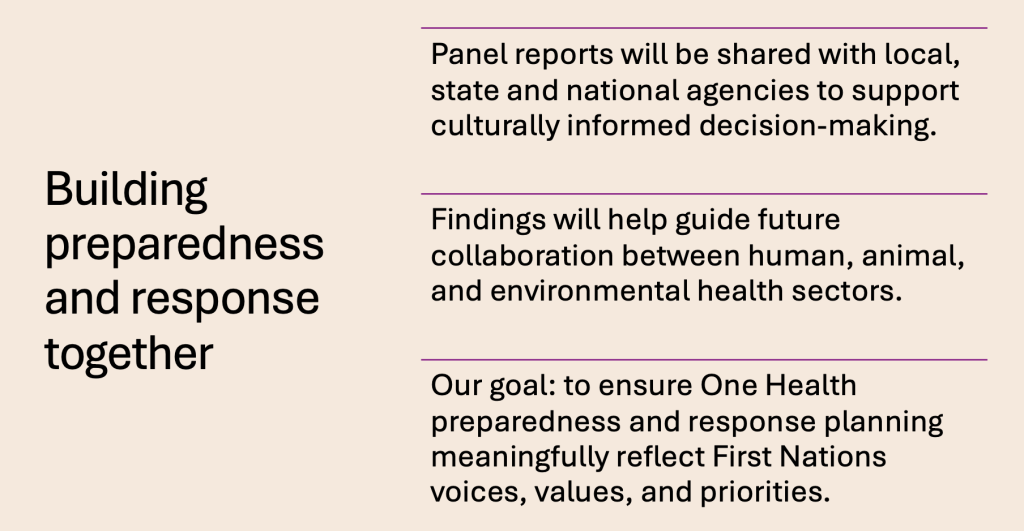
This model demonstrates how preparedness and response can be co-developed through structured First Nations-led decision-making processes. It reflects a holistic and coordinated approach that brings together human, animal and environmental health, breaking down silos that often exist between these different fields.
Watch the video and explore the slides to learn more about the First Nations Community Panel methodology in preparedness, and how it is being adapted in response to bird flu.
Project title: First Nations Community Panels: A public health governance model tested through Bird Flu preparedness